
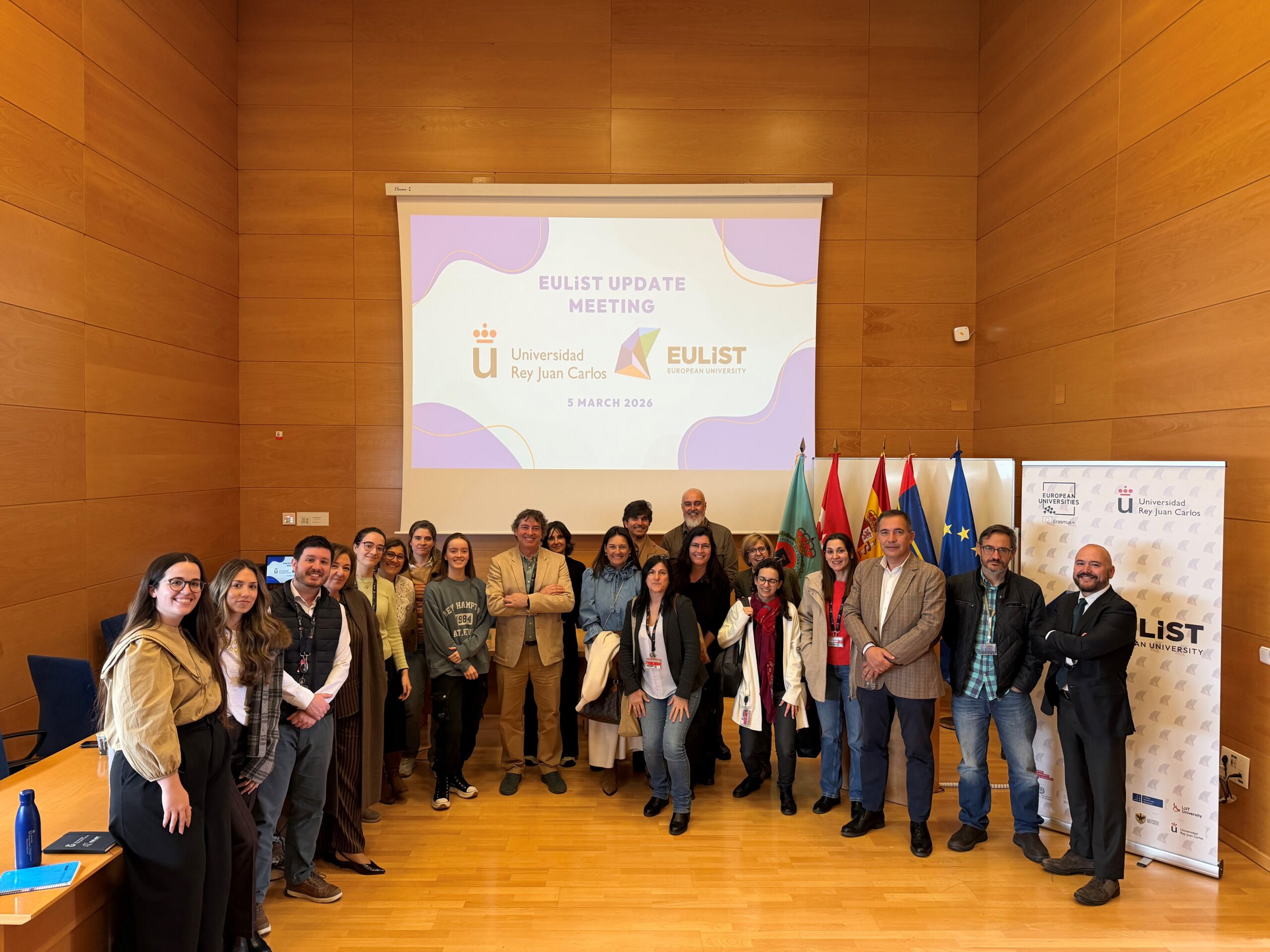
The Universidad Rey Juan Carlos (URJC) held the EULiST Update Meeting on March 5 with the aim of sharing with the university community involved in the project the progress achieved by the EULiST Alliance (European Universities Linking Society and Technology), as well as the main milestones and challenges that will shape its development in the coming years.
The meeting brought together the institutional and technical teams involved in the different tasks of the European project, providing an overview of the current status of the alliance and the areas of work in which URJC is actively contributing.
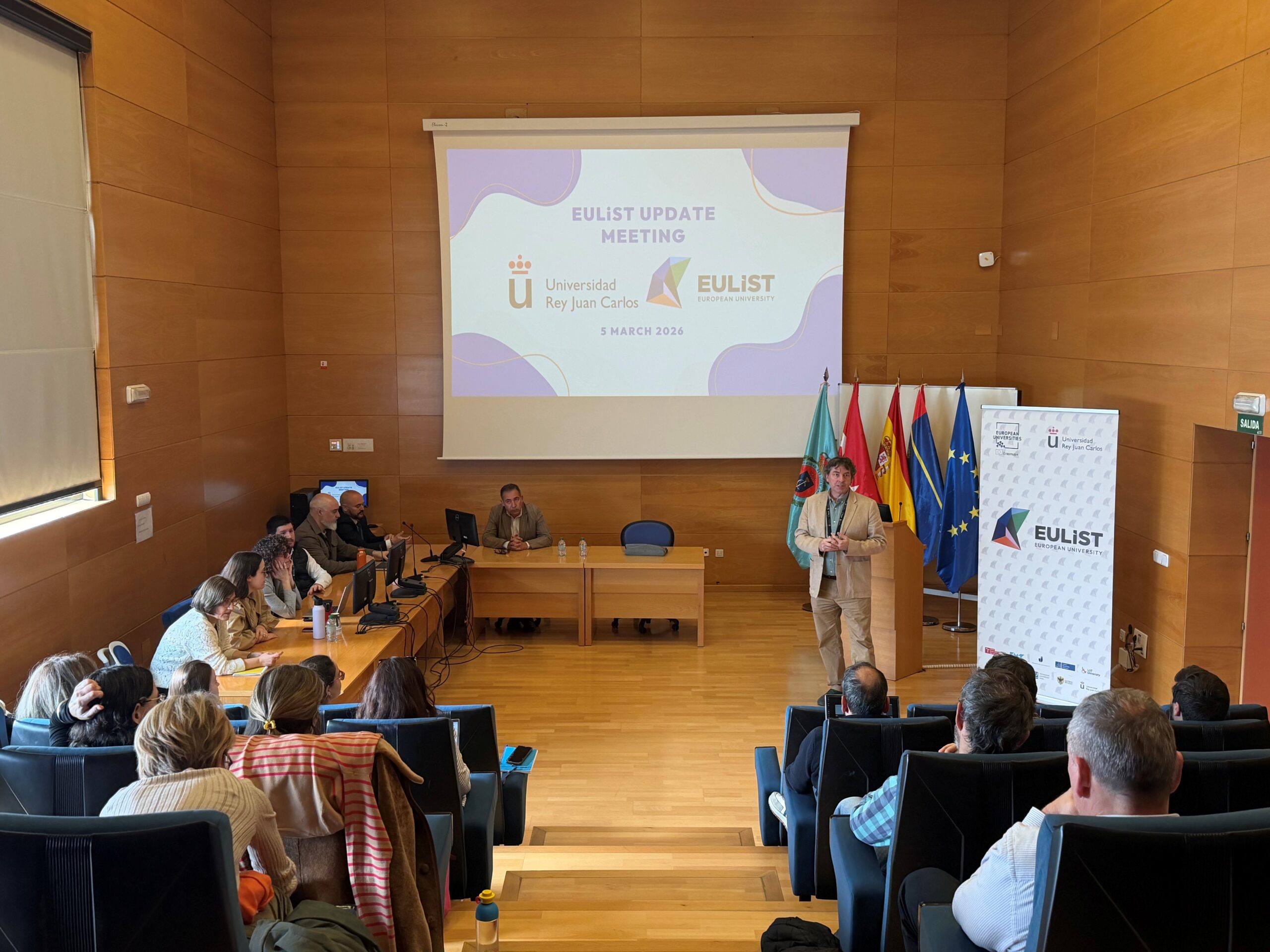
The session was opened by César Cáceres Taladriz, Rector’s Delegate for the EULiST Alliance, who highlighted the strategic importance of this initiative within the framework of the European Universities Initiative. This was followed by Pablo Tomás Salvadores Alonso, Director of Internationalization, who provided a general introduction to the project and to the organizational structure of the alliance, which at URJC involves more than 50 people and representatives from the university’s ten faculties and schools.
Progress in the Work Packages
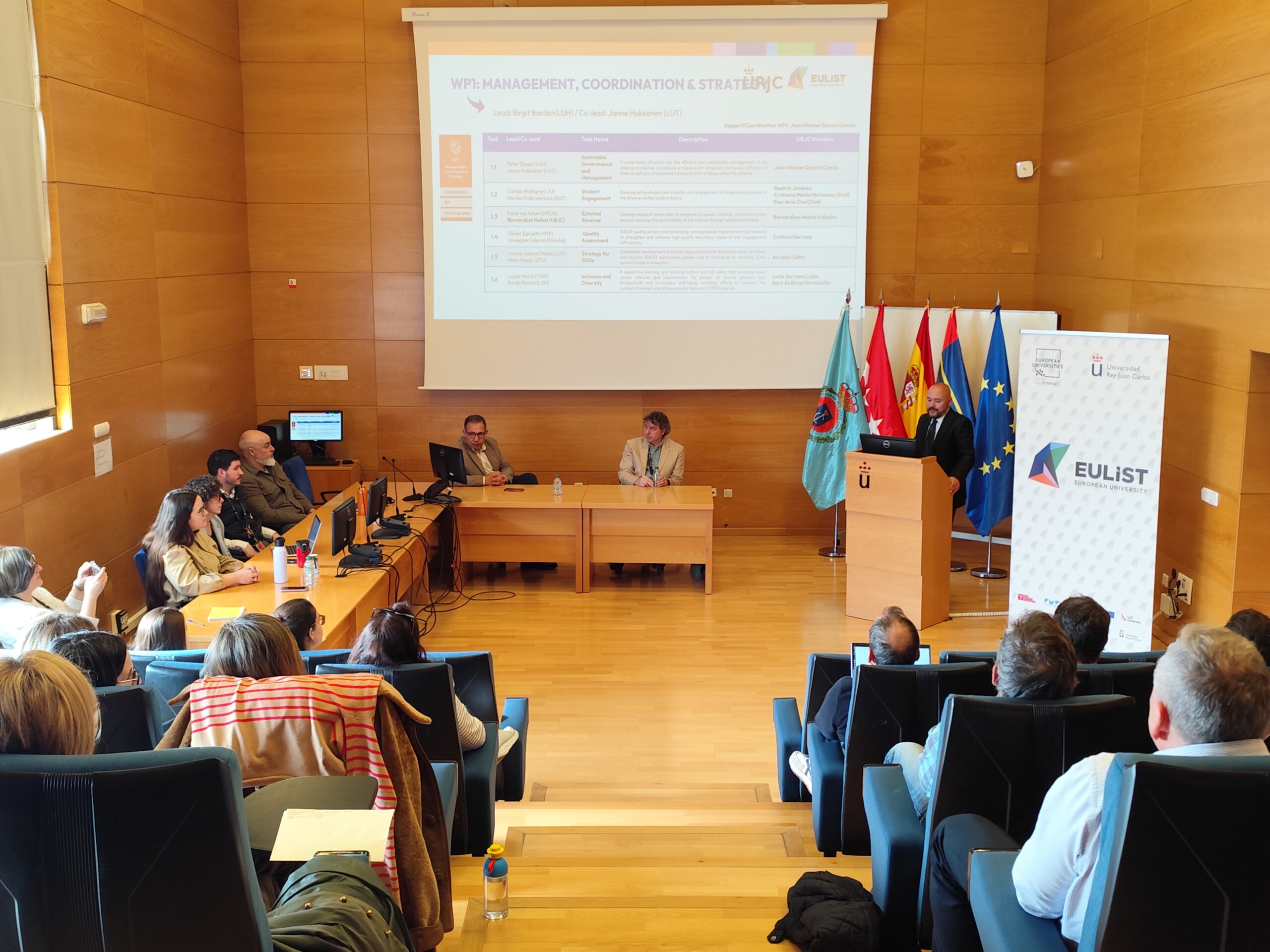
During the event, the technical leads of each Work Package (WP) presented the main results achieved so far and the activities currently underway:
-
WP1 – Management, Coordination & Strategy, presented by Juan Manuel García Camús, addressed progress in governance, sustainability and diversity in STEM, as well as challenges related to the development of a common quality and sustainability system and the legal framework of the alliance.
-
WP2 – Campus, coordinated at URJC by Bernardino Muñoz Valadés, presented key initiatives such as the development of the Digital Campus, the EULiST Course Catalogue, the Knowledge Hub and the Academic Support Centre for students and staff.
-
WP3 – Teaching and Learning, presented by Alejandro Galiano Navarro, highlighted the availability of more than 350 courses in the EULiST catalogue, the promotion of innovative teaching methodologies and the integration of artificial intelligence tools into the digital campus.
-
WP4 – Research and Innovation, coordinated at URJC by Leticia Díaz Platero, presented advances in the development of common research strategies, research group databases and collaborative activities for early-career researchers.
-
WP5 – Outreach, Engagement and Transfer, presented by Juan Manuel García Camús, focused on communication, knowledge transfer and engagement with society, including the creation of innovation hubs and the development of a joint communication strategy for the entire alliance.
Communication and international outreach
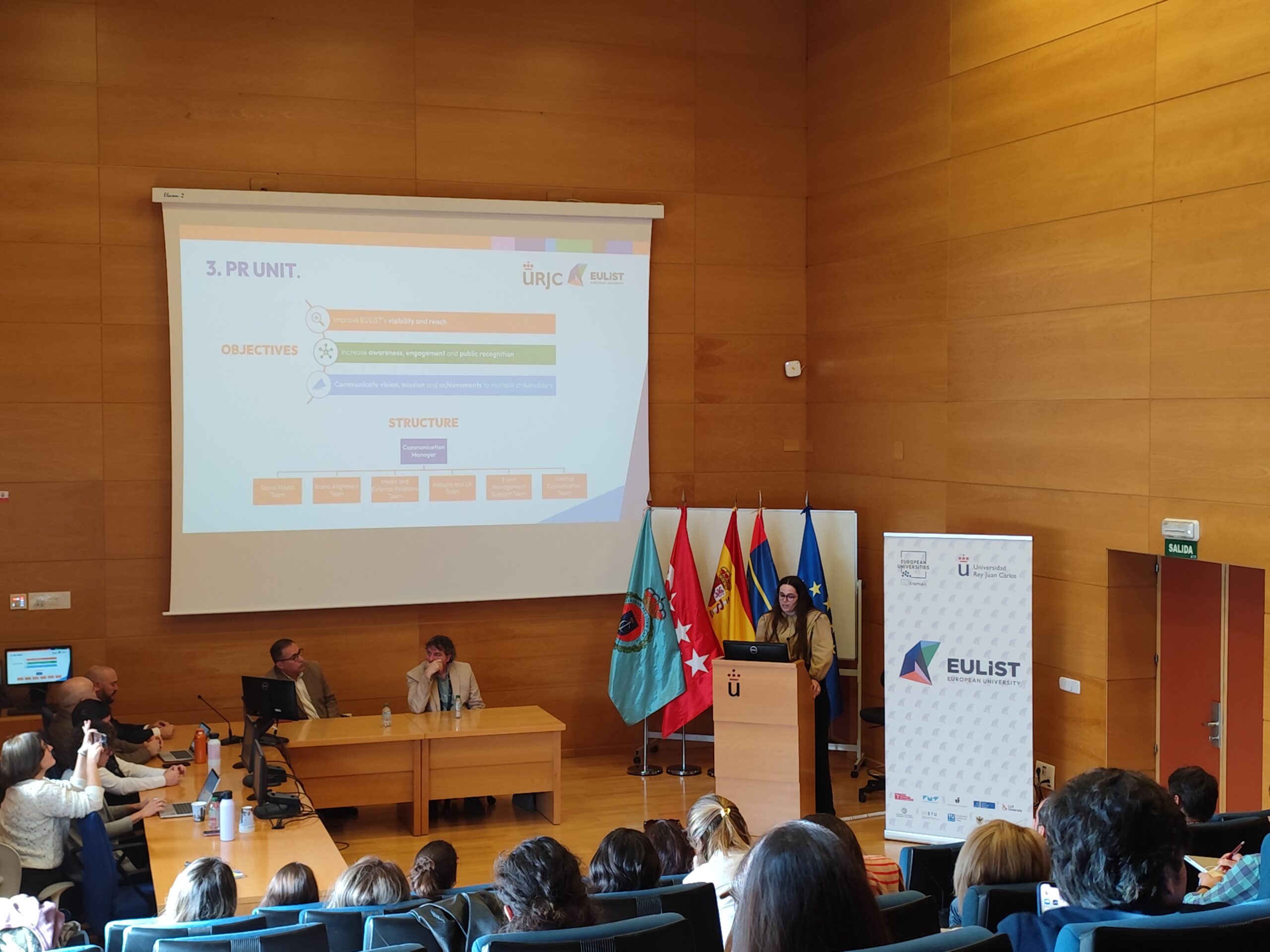
Beatriz Jiménez Sánchez then presented the evolution of the alliance’s communication model, which has moved from ten independent units to a joint PR Unit composed of representatives from all participating universities. This structure will help improve coordination and ensure greater consistency in the dissemination of EULiST activities.
The strengthening of the alliance’s communication strategy was also highlighted, including the launch of new social media channels and the development of digital tools aimed at improving the dissemination of activities, participation opportunities and project results among the university community and society.
Looking ahead to the future of EULiST
The final session was dedicated to reflecting on the future of the alliance and its upcoming milestones, including new initiatives in collaborative research, innovative education and knowledge transfer, as well as the strengthening of cooperation among the member universities.
The event concluded with a Q&A and discussion session that helped reinforce internal coordination and further consolidate URJC’s participation in this European alliance, which aims to connect society and technology through higher education, research and innovation.